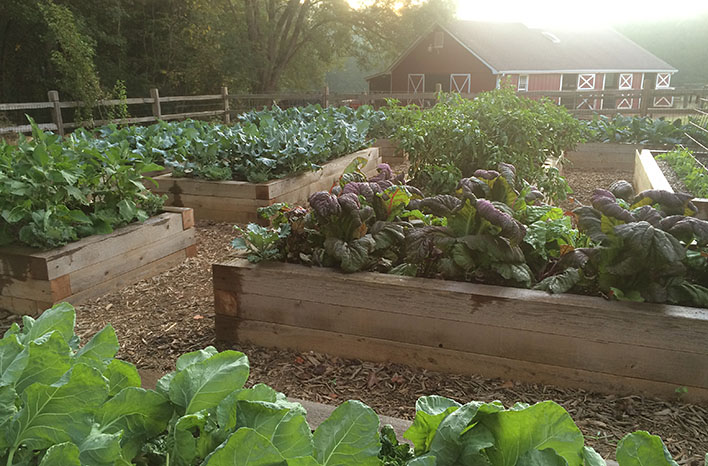
Fall may feel like the end of the gardening year, but in reality, it’s one of the most important times to be outside. What we do now not only prepares our gardens for winter but also sets the stage for success next spring. In this episode, I’m sharing things to do in the fall gardening season and how I stay on task — from managing weeds and saving seeds to dividing perennials and protecting young trees — without getting overwhelmed by the endless to-do list.
Spring is like a freight train off in the distance. It seems so far away, but we can’t tell how fast it’s moving, and next thing we know, we’re going to get run over if we don’t get out of the way. There’s so much happening all at once, Mother Nature’s not waiting on us to be ready. It’s happening whether we’re ready or not.
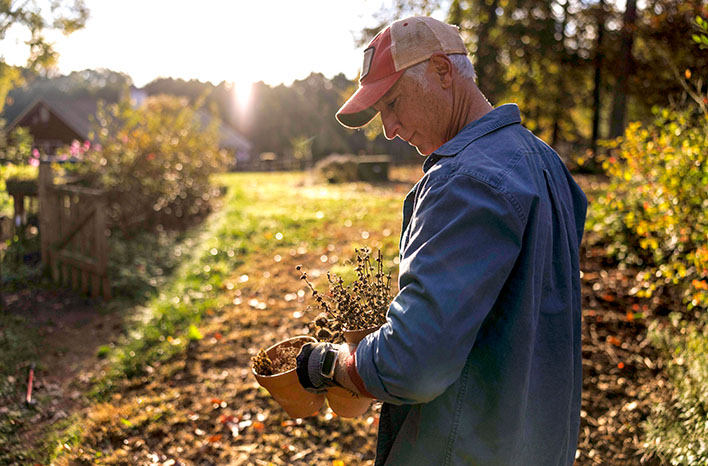
There are many tasks to get done in fall to set your garden up for spring success.
Don’t let yourself be caught by surprise when spring comes. The more we can accomplish now, the less we’ll have to scramble when spring comes barreling in. Fall work pays off in smoother, more enjoyable gardening next season, when everything seems to happen at once.
Managing Overwhelm
In the height of the summertime, many of us feel overwhelmed. Everything is in full growth mode, weeds and all, and it just becomes too much. We need to find strategies to manage that workload.
And weed overwhelm can even happen in the fall when things are supposedly slowing down. One thing that does not slow down in fall is the weeds. There are warm-season weeds and cool-season weeds. And when you’re in that transitional time of year — September, October — the warm-season weeds are still growing strong and the cool-season weeds are coming up too. So now you have this convergence of the worst of both worlds coming at you. I’ve been out in my garden trying to gain some headway with it, but let’s face it, life gets in the way. I’ve been extra busy this year with traveling and some other things, and I haven’t been out in the garden as often as I would like to have been. When I do get out there and see how much there is to get done, my heart beats a little bit fast.
To tackle weeds and take care of important tasks in a manageable way, I set a timer for myself. I go out in the morning knowing that when the timer beeps 90 minutes later, I can stop. I don’t feel pressured to keep going.
I also stay on task. I know what needs to get done, and I don’t let other things that I notice in the garden distract me from what I set out to do.
If I know I need to get to the weeds, that is No. 1 priority on my list. I get out there and put blinders on. Usually, I’m listening to a podcast, and the time goes pretty fast. You can really make a big dent in your weeds in 90 minutes. And if you’re lucky enough that it’s rained in the past day or two, the weeds will come up a lot easier.
Because many weeds are going to seed at this time, pulling them out now will mean far fewer weeds to deal with next year. Surface-rooted weeds will be the easiest to deal with, but when addressing tap-rooted weeds, make sure to dig the whole root out. Otherwise, the weeds will grow back from whatever portion of the taproot is left behind. I like using my soil knife to remove tap roots.
When that timer goes off and I’m done with my 90 minutes, I’m probably nowhere near done with the weeding or whatever the job of the day is, but I can feel good knowing that I’ve made a big dent. I can walk away, and tomorrow or the next day I’ll do it again.
It’s been liberating for me to find a way to manage all the work that has to be done around two and a half acres of landscape and gardens. So try that on for size if you haven’t. Map it out, and ink it into your schedule. It will lighten the stress load, and you’ll still make good headway.
Save Native Perennial Seeds
I grow a lot of native perennials, and I start a lot from seed. Many of them reseed themselves as well.
At this time of year, summer perennials that have finished blooming are going to seed. And some of the cool-season flowers are doing the same.
Joe-Pye weed (Eutrochium) and iron weed are two examples of late-summer and fall bloomers that are going to seed right now, and it’s a great time for you to be thinking about saving those seeds. If you don’t do anything, they’re going to drop to the ground. And hopefully many of those seeds will overwinter and then germinate in place. But I like to save the seeds and then decide where I want to put them.
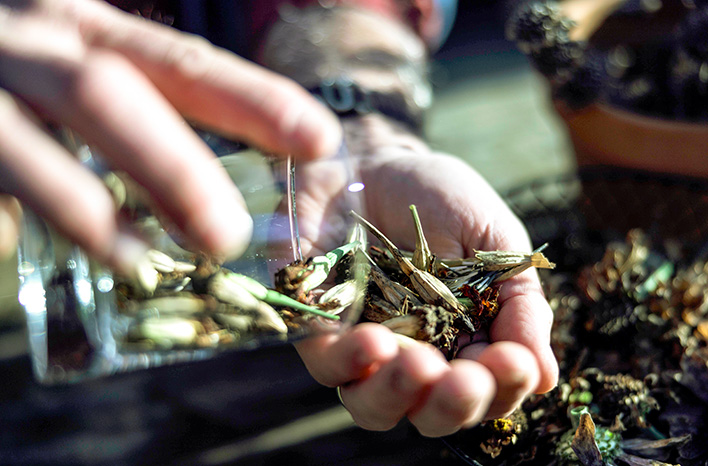
Saving seeds is a great way to get free plants to expand your garden.
Wait until the seed is fully ripe before collecting it. This can be tricky, because seed tends to drop to the ground when mature. To avoid missing the window of opportunity, I put organza bags over seedheads before the seeds are mature. These draw-string mesh pouches will hold onto the seeds so they don’t drop to the ground, where you’ll have a hard time finding them.
A few weeks from now, when the seeds are definitely dried out and the stems are brown, you’ll know it’s safe to collect the seeds.
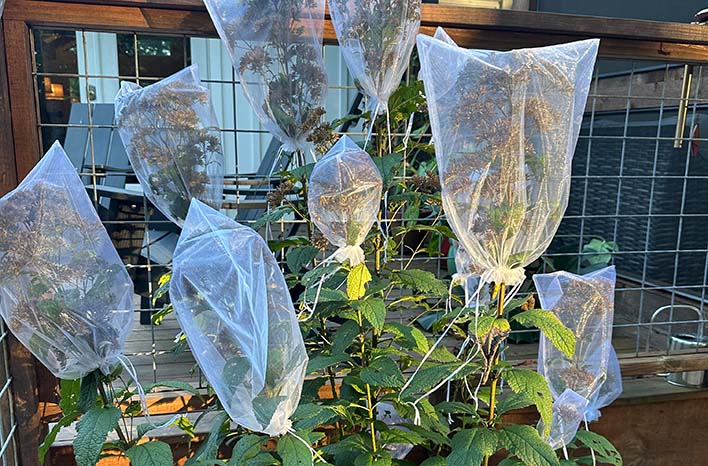
Organza bags will capture ripe seeds and prevent them from getting lost on the ground.
Plant Native Perennials for Fall Blooms and To Aid Pollinators
Is your ornamental garden missing fall blooms? You need native perennials. The time to plant them is now. Even if they don’t put on a show this year, they will in the years to come.
When you plant now — as the soil is still warm even as air temperatures dip — the plants will have the opportunity to get established while under very little stress. The roots will form and grow out this fall, then come spring, the plants will be well on their way.
Flowers that bloom in the summertime are great for attracting pollinators and they’re beautiful for us too. We do want a beautiful garden, but we want it to have ecological value too — and not just in the summertime.
Having blooms in fall is extra important because most other flowers are spent by fall. Though they’re done, the pollinators and other beneficial insects are not done. The migrating monarchs that are coming through and all the other flying insects need to eat until they start to overwinter. They’re going around for another few months, and they need to have food sources for that. If you really want to be a good ecological gardener, keep in mind what you can do so that there’s opportunities for them to have access to nectar and pollen.
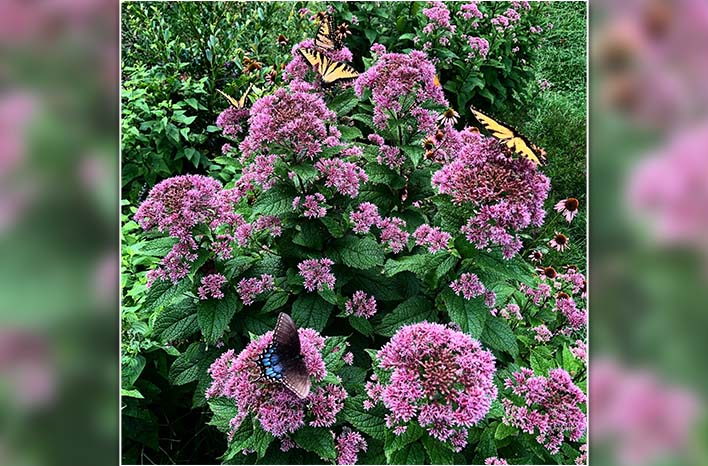
Fall-blooming native plants such are Joe-Pye weed are essential food sources for pollinators.
Fall-blooming plants such as solidago (goldenrod), echinacea (purple coneflower), eutrochium (Joe-Pye weed), iron weed and asters should be left standing after they finish blooming. That’s because their seeds will provide food for birds in the winter, and their hollow stems are nesting sites for bees and other beneficial insects. Solitary bees bore little holes into the stems and lay their eggs inside. That’s where the next generation will hatch from next spring.
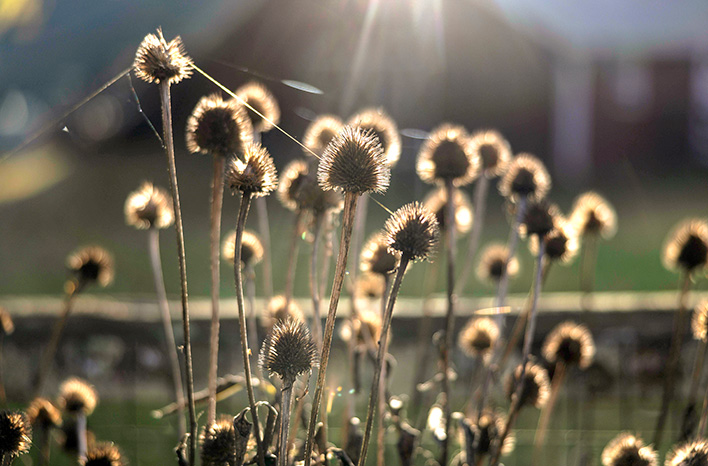
The seed heads of native perennials provide food for birds in winter and the stems provide nesting sites for solitary bees and other insects.
Don’t Be so Tidy
In addition to refraining from cutting down stems, don’t clean up the leaves and other fallen debris that makes up the duff layer under plants.
There was a time — a long time ago in my horticultural training years — when the conventional wisdom was that you should “put your garden to bed” by cleaning up everything so you’re not over allowing disease spores to overwinter to create more problems next spring. Well, I got news for you. Those disease spores are coming in all through the year. And whether you clean up the duff layer or not, you’re still going to have disease spores coming in next spring and all through the year. So just because you clean up in the fall doesn’t mean you’re going to be disease-free next spring.
More importantly though, that plant material that we used to clean up makes up overwintering sites for wildlife.
You’ve heard the leave the leaves concept. It’s very important that we do that for wildlife, and you can still protect your lawn by moving leaves off the turf and into planting beds.
We do not want to bag leaves up, put them at the curb and let the trash trucks take them to the landfill.
Do your cleaning up next spring after it’s warmed up and the overwintering insects have emerged from their slumber in the protected environment that we provided by not being so tidy.
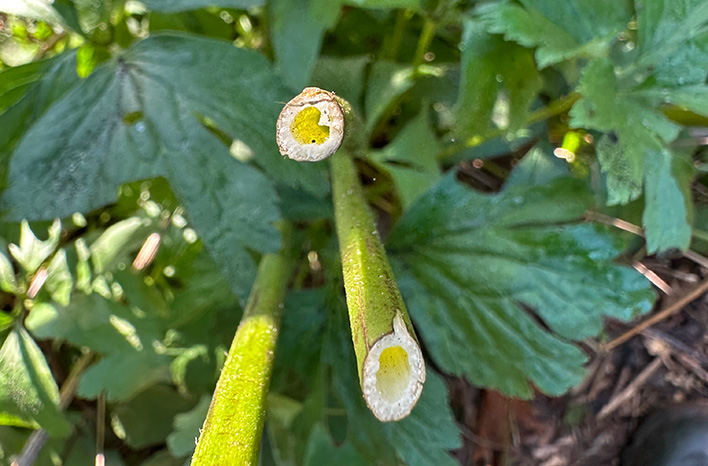
Leave hollow plant stems standing to host overwintering insects.
Why I’m No Longer Using My Favorite Mulch
My favorite mulch is shredded leaves, but I’ve decided I won’t be using them any more.
My farm manager Tobi rescued a paper bag full of leaves that someone had left at the curb, and she intended to spread the leaves out on her garden beds for winter protection. When she opened a bag, she found it was full of lacewing eggs, lady beetle larvae, adult lady beetles, and lots of other wildlife.
Hearing that really changed things for me. To top dress my raised beds, I had been shredding leaves. Any additional leaves, I would leave whole and distribute around my landscape beds. But now, I don’t shred any leaves at all. I just pile up the leaves and let them naturally decompose. It takes longer — maybe two seasons instead of one — but it’s a good compromise.
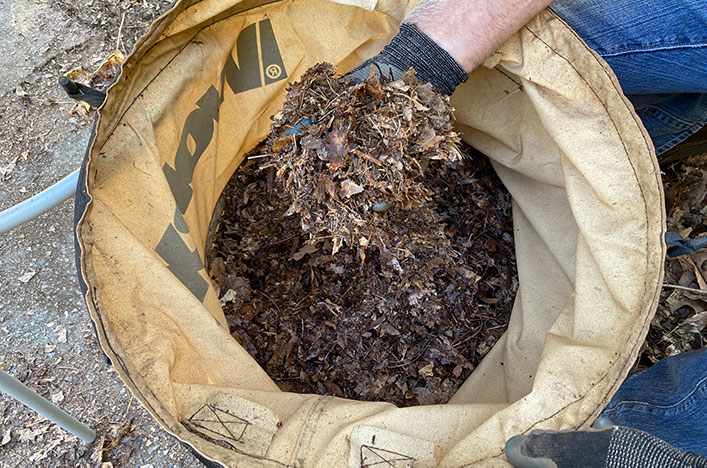
I am no longer shredding leaves for mulch. Shredding destroys the wildlife — eggs, larvae and adult insects — that overwinter on leaves.
Make Divisions for Free Plants
I love plant propagation, whether it be dividing plants or rooting cuttings.
My preference is to do my divisions in the fall. And the reason for that is as many of those plants are going dormant, there’s less stress because they don’t need to be productive over the wintertime.
Take hosta for example. Fork it out or dig it out, and use a soil knife to go down the middle of a root mass and divide it. Plant the divisions, and in the remainder of fall, as the soil is still warm, the roots will regenerate, and the plants will be better positioned for growth to take off in spring.
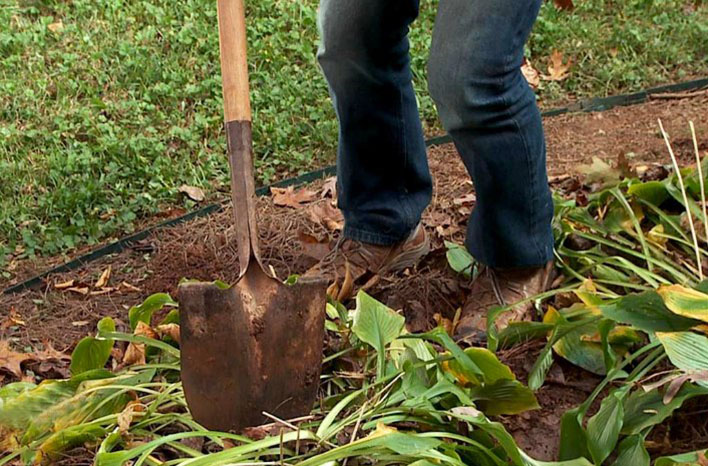
Hostas can be dug and divided with a shovel or soil knife.
Just be sure that you put a marker in the spot where you transplant. Because that will all disappear below ground, and you’ll forget it’s there or you won’t remember what you planted. So be sure to mark everything that you divide, and then replant.
Don’t overwater. It is important that you water in what you plant, but if it’s an excessively wet winter, don’t exacerbate that by adding a lot more water — because they don’t need it. They need a little bit of water to get established, but they don’t need it ongoing because they’re dormant.
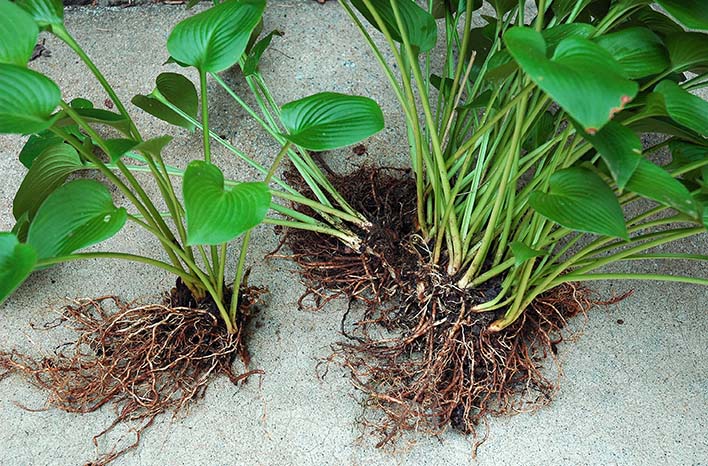
Hostas can easily be divided in fall for free plants.
Planting Spring-Flowering Bulbs
You can plant spring-flowering bulbs in October and November — or even later than November if the ground is not frozen or covered in snow or ice.
A couple years ago, I did a big spring-flowering bulb project. I planted several thousand bulbs around my greenhouse area, and it’s spectacular. You don’t need to do it en masse like that, but it’s nice if you can.
It’s time consuming, but it’s well worth it because it’s a one-time job. That’s the beauty of spring-flowering bulbs. You plant them one time, and then they just take off from there. You never have to touch them again, but about four or five years after the original planting, you can divide all the extra bulbs that have grown since then. It’s a great return on your money.
The classics are daffodils, tulips, dwarf iris, crocus, fritillary, muscari and my favorite, Galanthus (snowdrops), which are great in a woodland garden and just so beautiful. It’s classic English garden style.
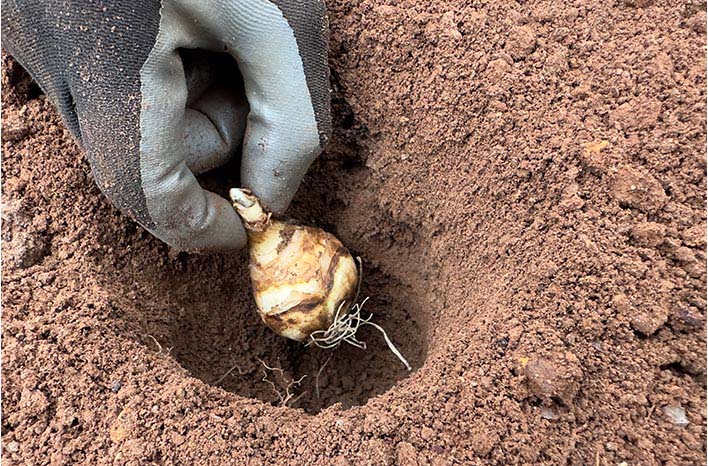
Plant spring-flowering bulbs now, and be rewarded for years to come.
Order Garlic To Plant Now
Fall is the time to plant garlic, usually in October or November. Then they don’t need any attention until it’s time to harvest bulbs the following summer. But the best garlic varieties tend to always sell out early. And unless you’re very proactive about it, by the time you think about it and get around to doing it, your favorite varieties will be sold out. If you haven’t ordered your garlic yet, please do that as soon as you read this.
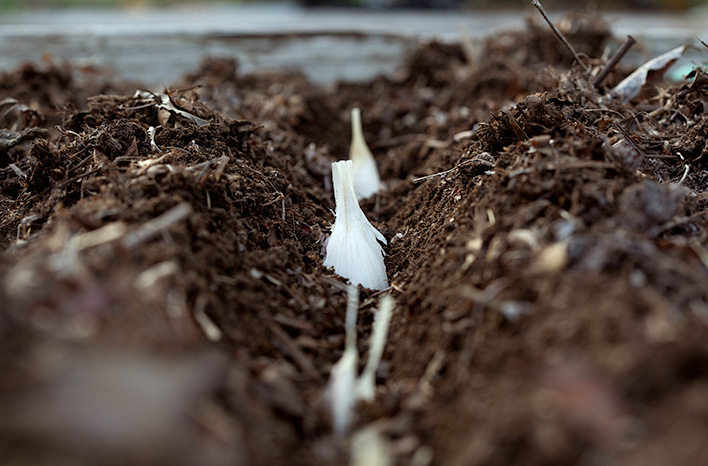
Plant cloves of garlic in fall and harvest bulbs in summer.
Photo Credit: Amy Prentice
Protect Trees From Deer Rutting
If you live in an area where deer roam, be proactive and protect young trees from deer rut damage.
This may have already happened to you because male deer don’t miss an opportunity. Usually it happens in October or November. The bucks are marking their territory and removing the velvet from their antlers by rubbing their antlers on hardwood trees that are about 4 inches in diameter.
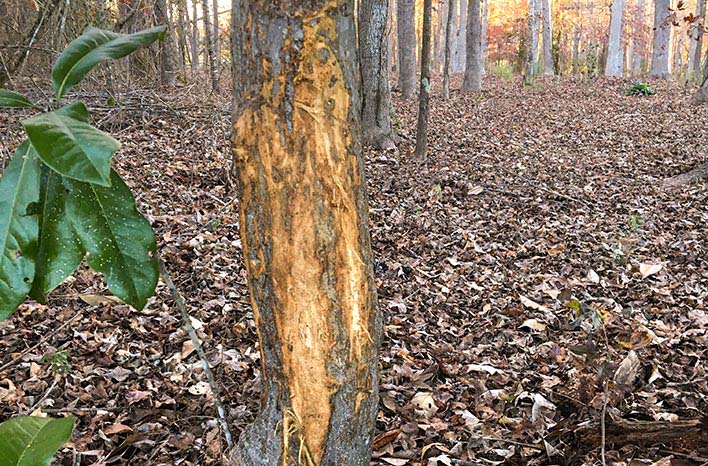
Deer rutting damage can doom a tree.
When deer rub on the trees, the soft bark comes off and exposes the cambium layer. If bark is removed all the way around the tree, that tree is done. And partial bark removal can also doom a tree, though it may take longer to die. I have lost quite a few of my beautiful dogwoods and other trees for that reason.
Wrap the trunk from the base up to the first scaffolding branches to protect it. You can buy deer barrier that is made specifically for this purpose. I have used rigid plastic drain tubing, cut lengthwise, but it is difficult to work with and leaves sharp edges. You can also use hardware cloth.
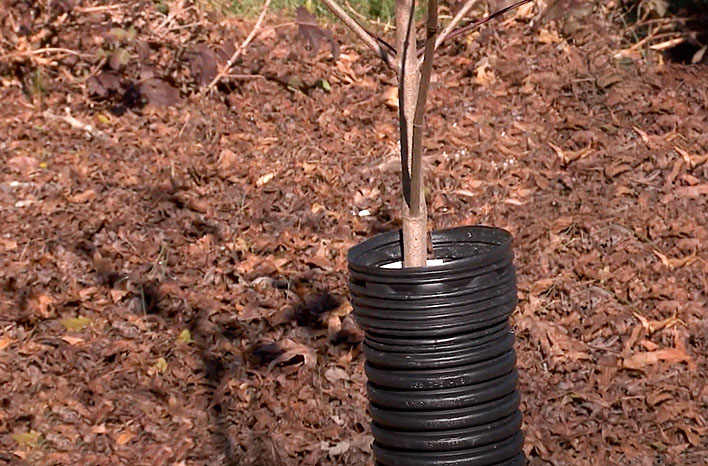
Rigid corrugated plastic tubes can be used to protect young trees from deer rutting.
Get Plants in the Ground Without Delay, and Protect Pots
If you purchased plants that are still in their nursery containers, it’s time to plant them. If those plants sit out all winter with their roots above ground in containers rather than in the ground and protected from the wind and cold, they might not survive.
Fall is a great time to plant because the soil is warm, which is conducive to root growth and expansion. And the air is not hot, so the plants aren’t stressed.
For plants that live outdoors year-round in large containers, there is a risk that the containers will break when the soil freezes and expands. You can mitigate this risk by adding bubble wrap inside the containers. The bubble wrap between the soil and the pot will cushion the pots as the soil expands.
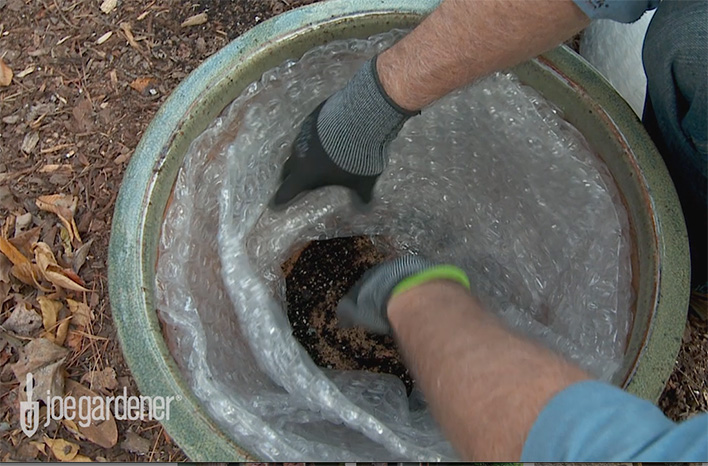
Bubble wrap in a container will provide some cushioning when the soil freezes and expands in winter. It could save a pot from cracking.
Refrain From Pruning
Pruning live branches in fall is a bad idea. Pruning leaves open wounds and stimulates growth. Open wounds are an invitation for pests and diseases, and new growth won’t have the time to harden off before winter sets in.
Prune live branches in late winter or early spring, just before new growth begins. Dead, diseased and dying branches can be removed any time of year.
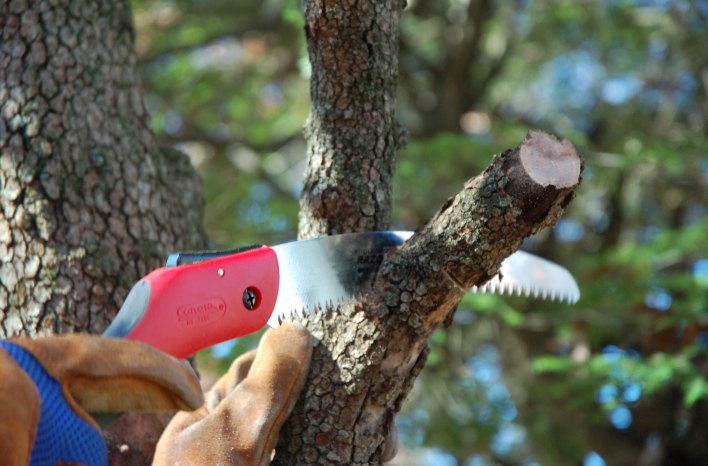
Fall is not the time to prune. Open wounds are an invitation for pests and diseases, and new growth won’t have the time to harden off before winter sets in.
My Fall Projects
My fall projects are underway or will be soon, and I will be documenting the progress to share with you.
One major project is upgrading my nursery area next to my greenhouse. This is an area covered in shade cloth, where I get plants acclimated to being outdoors. The area has never been big enough for all the plants I raise, so I am expanding it. I got started in August, took a pause, and will resume this month.
I am also rebuilding my compost bins. The existing bins are made out of free pallets. I select pallets that are all the same size and made from untreated wood. They last me four to five years before they need to be replaced. The price is right, and I still recommend pallets bins, though I have decided to upgrade. I will use concrete builders blocks that hold 2×6 lumber. I will make three-bay compost bins in the footprint of the existing bins. I am considering using composite lumber, so the bins will last forever.
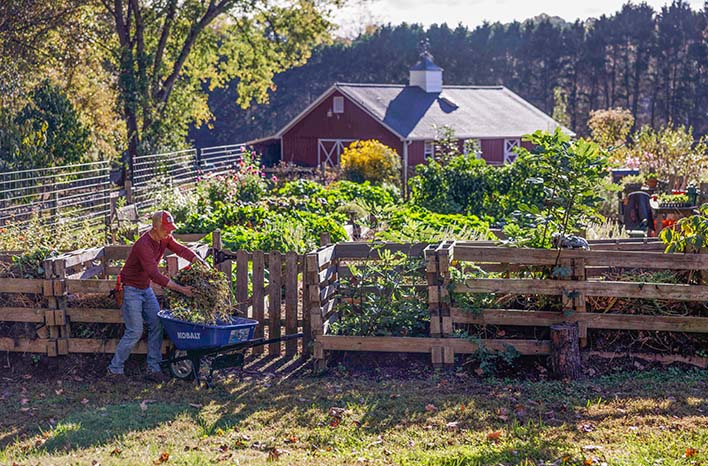
My pallet compost bins are due to be replaced after several years of service.
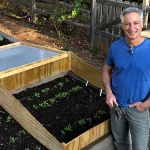
Another big project — one that I am dreading — is rebuilding my raised garden beds. Everything you’ve seen inside my raised bed garden area is going to come out, including 30 cubic yards of soil. It is a very big job, and I am still working out how to get it done right.
The soil is full of pathogens that cause tomato diseases because I have grown tomatoes every year for 14 years. I know that every time I plant tomatoes, the plants will inevitably become diseased. And I know that crop rotation reduces the presence of pathogens in soil, but I just love tomatoes and can’t imagine taking a break from growing them. Replacing the soil with new material will give my garden a fresh start.
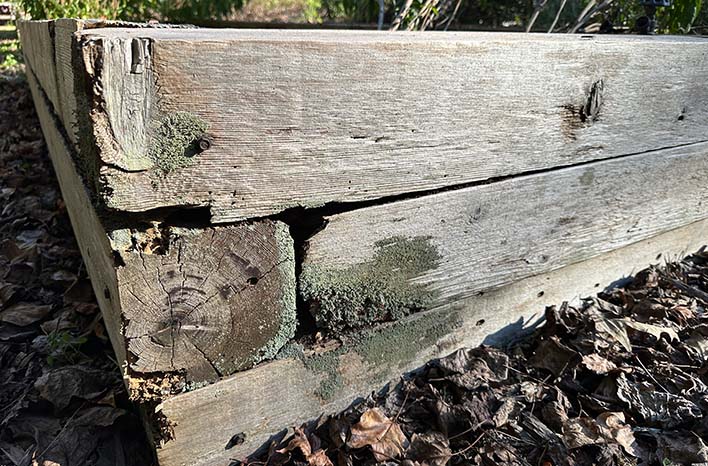
My raised beds have deteriorated after 14 years. This year, I will replace the beds and all the soil.
Narrowing the Demands on My Time
I get pulled in a lot of directions and always have so much going on. There are so many projects I’d like to work on and commitments to fulfill. This keeps me from diving as deep as I would like into the things that matter the most.
For 2026, I am going to focus on education. I feel like it is my role on earth to teach gardening. I have decades of experience and the formal training. There’s no replacement for the experience, but when you can fuse it with science-based education and training, it’s a great combination.
So in 2026, I’m going to say no to most everything that comes my way and really focus on four things: This podcast (which is now also available on YouTube where you can watch as well as listen); more educational videos on my YouTube channel joegardenerTV; webinars, both free and paid, deep diving on specific topics of interest; and my Online Gardening Academy™.
The Online Gardening Academy is a vibrant community, and I am there for the long-haul too.
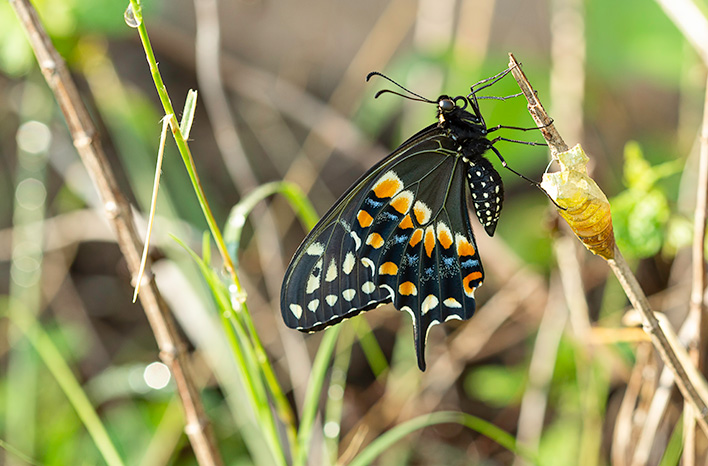
A black swallowtail butterfly (Papilio polyxenes) that has just emerged from its chrysalis. When we practice ecological gardening, we have opportunities to see more things like this.
Photo Credit: Amy Prentice
I hope you learned something about working effectively in the fall garden to set yourself up for spring success. If you haven’t listened yet, you can do so now by scrolling to the top of the page and clicking the Play icon in the green bar under the page title.
What fall garden tasks did I leave out? Let us know in the comments below.
Links & Resources
Some product links in this guide are affiliate links. See full disclosure below.
Episode 138: Why Pruning Matters: Principles, Recommendations and Tips from the Pruner’s Bible
Episode 228: Growing Great Garlic, With Alley Swiss of Filaree Farm
Episode 331: The Ecological Garden Blueprint: 10 Essential Steps That Matter Most
Episode 387: Leave the Leaves for Wildlife and the Climate
joegardener Blog: The Complete Guide to Growing Garlic (Everything You Need to Know)
joegardenerTV YouTube: How to Protect Trees from Deer Rut Damage
joegardenerTV YouTube: How to Add Spring Flowering Bulbs to Your Landscape in the Fall
joegardener Online Gardening Academy™: Popular courses on gardening fundamentals; managing pests, diseases & weeds; seed starting and more.
joegardener Online Gardening Academy Organic Vegetable Gardening: My new premium online course. The course is designed to be a comprehensive guide to starting, growing, nurturing and harvesting your favorite vegetables, no matter what you love to eat, no matter where you live, no matter your level of gardening experience.
joegardener Online Gardening Academy Master Seed Starting: Everything you need to know to start your own plants from seed — indoors and out.
joegardener Online Gardening Academy Beginning Gardener Fundamentals: Essential principles to know to create a thriving garden.
joegardener Online Gardening Academy Growing Epic Tomatoes: Learn how to grow epic tomatoes with Joe Lamp’l and Craig LeHoullier.
joegardener Online Gardening Academy Master Pests, Diseases & Weeds: Learn the proactive steps to take to manage pests, diseases and weeds for a more successful garden with a lot less frustration. Just $47 for lifetime access!
joegardener Online Gardening Academy Perfect Soil Recipe Master Class: Learn how to create the perfect soil environment for thriving plants.
Disclosure: As an Amazon Associate, I earn from qualifying purchases. I receive a commission every time you purchase a product through an Amazon affiliate link. Some product links in this guide are affiliate links. However, none of the prices of these resources have been increased to compensate us, and compensation is not an influencing factor on their inclusion here. The selection of all items featured in this post and podcast was based solely on merit and in no way influenced by any affiliate or financial incentive, or contractual relationship. At the time of this writing, Joe Lamp’l has professional relationships with the following companies who may have products included in this post and podcast: Milorganite, Soil3, Territorial Seed Company, Cool Springs Press / Quarto Group and Dramm. These companies are either Brand Partners of joegardener.com and/or advertise on our website. However, we receive no additional compensation from the sales or promotion of their product through this guide. The inclusion of any products mentioned within this post is entirely independent and exclusive of any relationship.